Updates
Market Study 2026: How German Companies Are Dealing with Rising Energy Costs

Written by:
Anne Fischer

Market study on energy costs and electricity procurement in German SMEs published
Energy costs are the greatest economic challenge for German SMEs
69% of companies want more flexible electricity procurement in the future
Over 70% are considering the use of battery storage systems
81% criticize the bureaucratic effort involved in the industrial electricity price
trawa published the Energy Monitor SMEs 2026 on June 16. The market study shows: Energy costs are burdening German SMEs more than ever before. At the same time, a clear movement towards more flexible electricity procurement models is discernible.
For many decades, energy markets were stable. Price fluctuations and market structures were manageable. This has changed fundamentally, especially since 2022.
Two developments are driving this change:
Firstly, the increasing share of renewable energies in electricity generation ensures that energy generation and energy demand are decoupled more and more. As a result, market prices fluctuate much more significantly.
Secondly, the energy crisis in 2022 triggered by Russia's war of aggression against Ukraine caused uncertainty for people in many companies. Particularly affected: companies in energy-intensive sectors, for whom cheap and predictable energy costs had long been a matter of course.
Medium-sized companies often do not have specialized personnel capacities for complex energy topics and quickly reach their limits in this new environment.
This is exactly where the Energy Monitor SMEs 2026 comes in order to better understand the impact of changing market structures. The market research institute INNOFACT AG surveyed energy executives from medium-sized companies for this purpose. Commissioned by trawa.
The goal: to draw a clear, data-based picture of how German SMEs manage energy costs today and what the future should look like.
Energy costs beat labor costs
For medium-sized companies from energy-intensive sectors, energy costs are the most pressing economic challenge today – even ahead of the shortage of skilled labor and the weak economy. They burden these companies even more than labor costs.
But they also look to the future with hope: More than half of the surveyed companies also see opportunities in volatile energy markets. As a direct reaction to the energy crisis of 2022, 37% of companies built up new internal expertise for energy procurement.
69% want more dynamics in electricity procurement in the future
By far the most important criterion in electricity procurement for 86% of respondents is cost reduction. Currently, three-quarters of companies still obtain their electricity at fixed prices, but that is about to change:
69% are counting on more dynamics for their future electricity procurement. Most are planning to switch to models with shares of market-price electricity or renewable energy.
Full flexibility? Not for everyone yet
The willingness to change is there, but the readiness for total flexibility has its limits. 75% of the surveyed SMEs want electricity supply models that continue to contain a fixed-price component.
Dynamics, yes, but with safety.
Companies are also looking into the topics of real-time electricity consumption and pricing data, as well as energy management software. However, these tools are far from being widely implemented and are not yet planned in every company.
Trend topic battery storage: Over 70% are looking into it
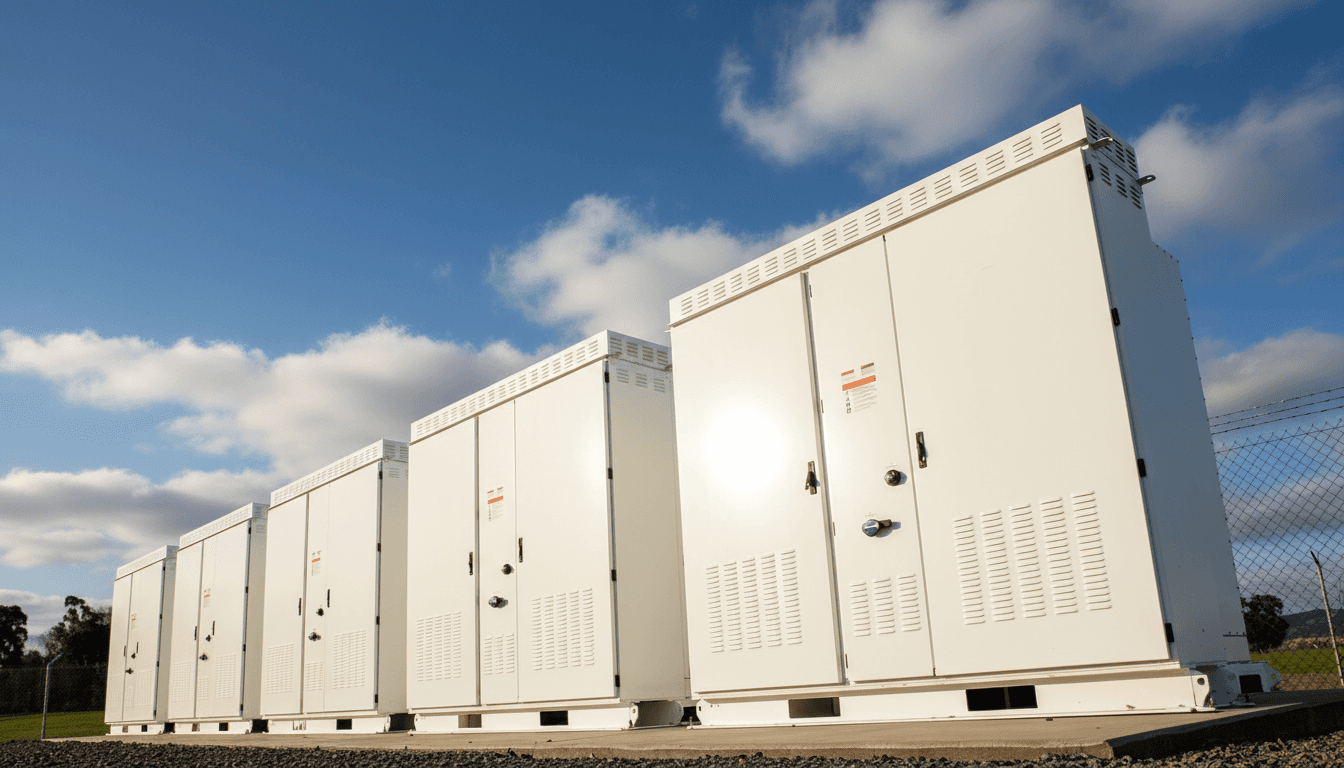
Another key finding: Over 70% of the surveyed companies are looking into the use of battery storage systems. A quarter already use them in times of higher volatility in the grid. 46% are actively discussing their use. Only 19% have explicitly decided against a battery storage system.
The biggest hurdles when deciding on an owned energy storage system: high acquisition costs and uncertainty about how quickly such an investment will amortize.
Industrial electricity price: Desired, but out of reach for many
64% of respondents consider government intervention in the energy markets to be important to safeguard SMEs.
However, the recently approved state relief measure industrial electricity price is far from reaching everyone: Less than half of the surveyed companies from sectors with increased energy demand qualify for this measure at all.
And even those who would be eligible in principle see high obstacles: 81% complain about the disproportion between bureaucratic effort and expected relief.
“The Energy Monitor SMEs 2026 clearly shows: SMEs are under pressure, but they are moving. The readiness for more flexible electricity procurement is growing. What is missing are the right tools and a regulatory framework that actually arrives." – David Budde, Managing Director of trawa.
About the study
The Energy Monitor SMEs 2026 was commissioned by trawa and conducted by the market research institute INNOFACT as an online survey. The data collection took place from February 23 to 26, 2026 in Germany.
A total of 304 people from medium-sized energy-intensive companies with 50 to 1,000 employees were surveyed.
The study examines which challenges trouble German SMEs regarding energy costs, how companies view the energy market after the energy crisis of 2022, which electricity procurement models are currently used, and what is planned. It also analyzed what medium-sized companies think about using battery storage systems and how they evaluate the regulatory measure of the industrial electricity price.
You can find the complete market study contains all relevant information on energy procurement for SMEs here
Note: Data collection took place prior to the recent geopolitical developments in Iran. These are not reflected in the study results.
If you have any questions about the market study, please feel free to contact us. Your contact person is Zoe Schirren (zoe.schirren@trawa.de).
Source: trawa, Energy Monitor SMEs 2026, survey period February 23–26, 2026, Germany.
Updates