Updates
Secure energy supply despite dark doldrums – strategies for medium-sized businesses

Written by:
Linda Elberskirch
Dunkelflauten in Brief
Dunkelflauten (dark doldrums) are periods with low wind and solar generation.
This leads to supply bottlenecks that put more pressure on the power grid and push prices upward — while simultaneously increasing the requirement for grid flexibility.
Companies with a high spot market share feel price peaks during Dunkelflauten particularly strongly, while they benefit disproportionately during peak phases (e.g., lots of wind).
For partially hedged portfolios — such as with Power Purchase Agreements (PPAs) — the impact depends heavily on the structure. Although fixed prices provide security, they often lead to higher overall costs on an annual average.
Why Are Dunkelflauten Gaining Relevance?
With a renewable share of over 50 percent in the German electricity mix — aiming to rise to 100% renewables — stable supply is becoming an increasingly complex task. Phases with significantly below-average wind and solar production occur on average about two to four times per year (especially in late autumn and during the winter months) and put the energy system to the test. During these phases, the balance between supply and demand can only be secured through the flexible use of storage, reserve power plants, and short-term electricity trading, which causes prices to rise.
Symptomatic of this is the current discussion regarding additional gas-fired power plant capacities to secure grid stability. Although the federal government is pushing ahead with corresponding plans, many energy utilities are hesitating due to economic uncertainties and a lack of market incentives. This struggle highlights the conflict of objectives in energy policy — between security of supply, climate targets, independence from foreign countries, and the reality of investment.
Two- to Ten-Fold Price Spikes for Companies Without Hedging
For companies, Dunkelflauten often mean unexpectedly high electricity costs. During the Dunkelflaute in winter 2024/25, electricity prices on the EPEX Spot market temporarily rose to 936 €/MWh — an extreme level compared to the annual average of approx. 80 €/MWh. Thus, the price was temporarily around 11 times higher than the average annual level.
For energy-intensive companies with 24/7 production, this can mean a sudden doubling to tenfold increase in energy costs in their own energy mix if they do not have active control or hedging.
How strongly and in what way a company is affected depends on the procurement model:
Fixed-price tariffs:
Companies are initially unaffected but must expect higher prices in the medium term. This is because providers act to some extent as insurers against price fluctuations — and the more the volatility in the national market increases, the higher their risk premiums become. Price peaks from times of Dunkelflauten thus flow directly into future tariff calculations - the "insurance policy" of the fixed price therefore becomes more expensive.
Spot tariffs (or tariffs with a spot share):
Although companies also benefit from overcapacities and negative electricity prices, they are directly affected by higher prices during Dunkelflauten. In particular, energy-intensive companies can be forced to scale back or temporarily halt production as a result.
As you can guess: the dose makes the poison with both extremes.
Companies can not only cushion Dunkelflauten – but actively use them to their advantage
Our experience shows: those who manage correctly benefit. Companies can achieve security of supply and cost advantages simultaneously – with an integrated setup consisting of strategic procurement, storage solutions, and transparency.
With trawa's optimized electricity procurement models, intelligent load management (use of battery storage), and constant monitoring, Dunkelflauten change from a risk into a manageable challenge, turning energy into a strategic lever.
1. Tool Rather Than Instinct: Combine and Stagger Energy Procurement in Time
Combine fixed and variable procurement shares for an optimum of price stability and flexibility. In the so-called portfolio model, electricity purchasing is not set at a single point in time but is distributed over different periods and products.
This creates a mix of long-term hedges and short-term market positions. This balance is automatically achieved through the staggering of purchases in time and targeted over-coverage, for example, with direct sourcing from wind and solar farms (Power Purchase Agreements, PPA).
In this procurement model, companies can actively adapt their purchasing strategy to market developments: In phases of low prices, larger quantities are committed for the long term, while in high-price phases, less is deliberately hedged and more is purchased on a short-term basis. Through purchasing staggered over time, price fluctuations can be smoothed out and market risks reduced — comparable to an ETF savings plan for electricity.
2. Implementation of Storage Solutions and Flexibility Strategies
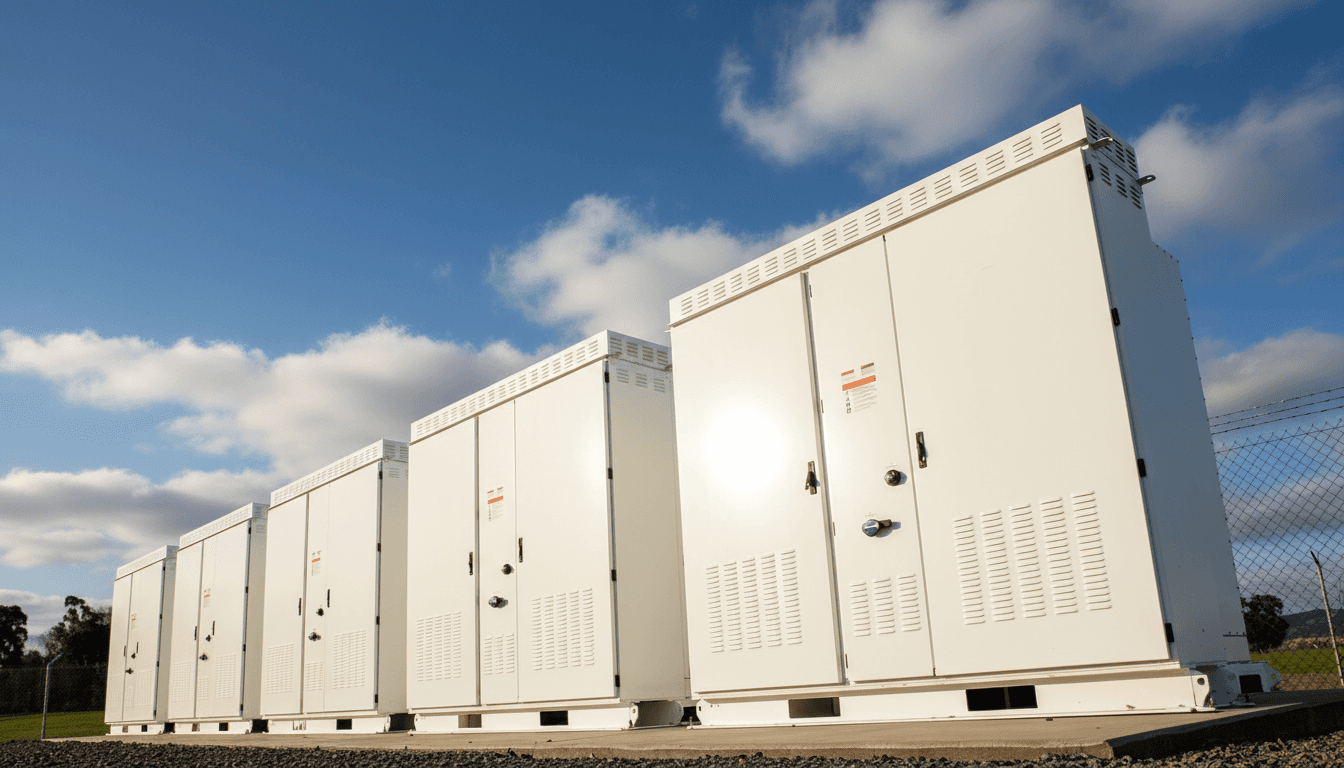
Rely on intelligent storage and flexibility concepts to specifically cushion price peaks – for instance during a Dunkelflaute. Battery storage systems enable price-optimized charging: electricity is stored during hours of low (or even negative) market prices and used again during high-price phases.
The battery literally stores the cheap electricity, making it possible to avoid expensive grid-use peaks and actively optimize procurement costs.
Additionally, you can specifically shift controllable processes and deploy your own generation capacities during high-price phases. In this way, you not only increase your security of supply but also reduce your energy costs – even outside of Dunkelflauten.
3. Creating Transparency with Real-Time Data
Create full transparency over consumption, peak loads, and electricity prices in order to identify risks early on and make well-founded decisions - ideally even automated. Real-time data and historical consumption analyses show when and why costs rise - of course, during a Dunkelflaute or in high-price phases.
With software solutions such as Energy Management Systems, exactly that is achieved – energy consumption and prices are recorded live, analyzed, and visualized in a clear cockpit.
This creates the foundation for learning procurement strategies or battery controls – and ensures better decisions during the next Dunkelflaute.
Conclusion: Risks from Dunkelflauten can be minimized with three simple measures
Dunkelflauten have long been part of the reality of the energy transition and are here to stay – the key factor is how they are dealt with.
Companies that utilize strategic procurement models, adapt their consumption flexibly, and have transparency not only secure their supply and margins but can even benefit from volatile markets.
This is precisely where trawa comes in:
AI-Optimized Electricity Portfolio: Our AI-supported software develops the optimal procurement concept based on your individual load profile – and factors phases of low wind and solar production into the electricity mix.
Intelligent Storage Integration: We support companies in implementing intelligent battery storage solutions. Through live control, storage systems and PV systems can be optimally deployed in the spot, intraday, and balancing energy markets. In doing so, meteorological data and company-specific load profiles are continuously incorporated into the forecasts to detect Dunkelflauten and price peaks early on and actively compensate for them.
Full Transparency: The trawa energy management software creates an overview and forecast of consumption and costs in real time – for data-based decisions and maximum control.
The result:
Up to 30 % lower electricity costs, full security of supply, and 100 % renewable energy.
Find out in our Success Stories how companies are already benefiting.
We would be happy to analyze how resilient your current strategy is – and show you how trawa can get you through the next Dunkelflaute.
→ Arrange an initial consultation at https://www.trawa.de/kontakt
Sources:
https://www.ffe.de/veroeffentlichungen/deutsche-strompreise-an-der-boerse-epex-spot-im-jahr-2024/
https://www.agora-energiewende.de/fileadmin/Projekte/2025/2024-18_DE_JAW24/A-EW_351_JAW24_WEB.pdf
https://www.bdew.de/media/original_images/2025/05/22/bdew_fortschrittsmonitor-2025.pdf
Updates